
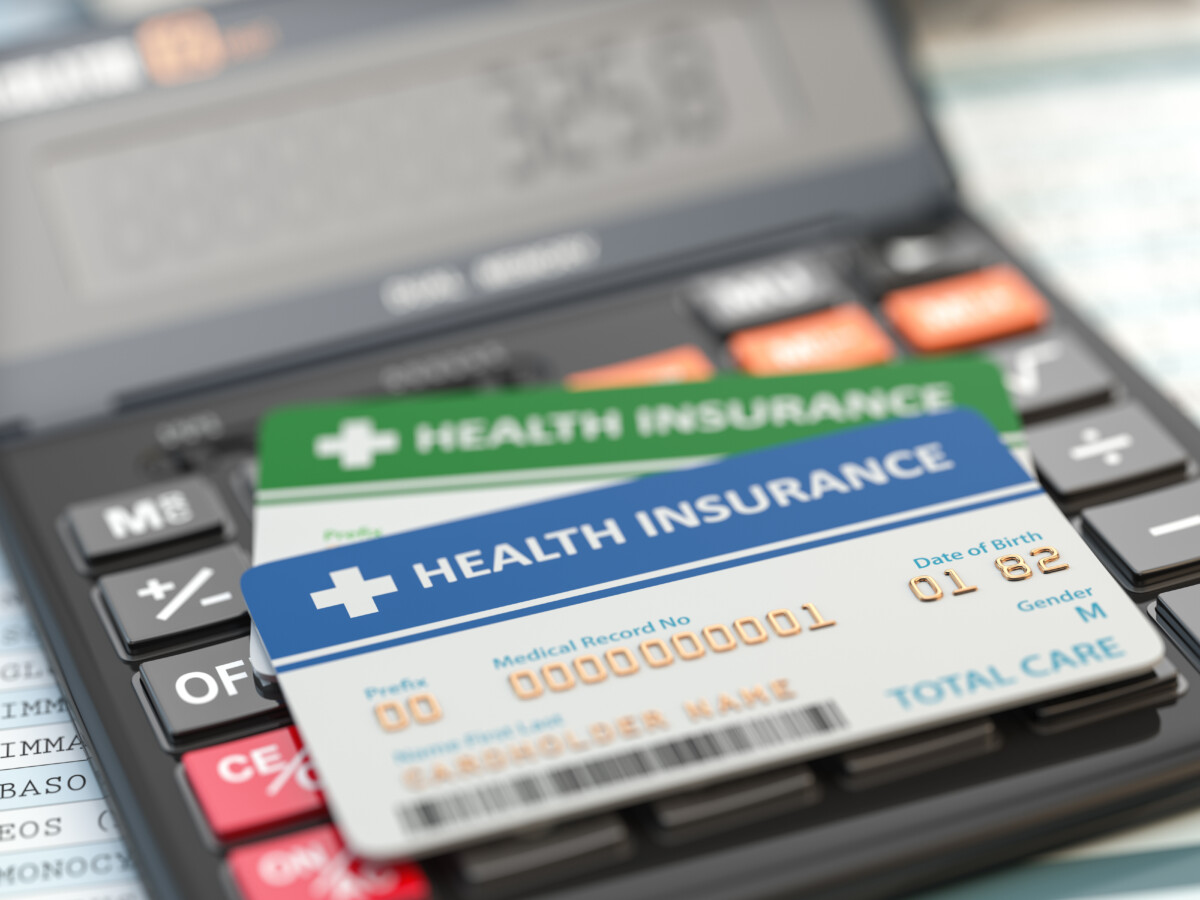
Paying Health Insurance With a Credit Card: Pros, Cons, and Fees
Learn if you can pay health insurance with a credit card and the crucial fees to consider. For personalized guidance, call our experts at (833) 877-9927.

By Colleen Hartwell
Compare health plans
Finding plans in your area…
When your health insurance premium is due, your checking account might not be as ready as you are. In these moments, the plastic in your wallet can look like a lifeline. The direct answer is yes, you often can pay health insurance with a credit card, but this simple transaction is layered with critical financial implications. From convenience and rewards to potential fees and debt traps, using a credit card for this major recurring expense requires a strategic approach. Understanding the rules, the costs, and the alternatives is essential to making a decision that supports your financial health as much as your physical well-being.
Understanding the Landscape: Who Accepts Credit Card Payments?
The ability to pay your health insurance premium with a credit card is not universal. Acceptance depends entirely on who is billing you. Major health insurance carriers, including national providers and regional Blue Cross Blue Shield plans, frequently offer credit card payment options through their online portals or automated phone systems. Similarly, if you purchased a plan through the federal or a state-based Affordable Care Act (ACA) Marketplace, you can typically use a credit card for your monthly premiums. However, many employer-sponsored group health plans do not accept direct credit card payments from employees; premiums are usually deducted from your paycheck pre-tax. For those exploring individual plans, understanding the full scope of options, including plans with different deductible structures, is crucial. Our analysis of $0 Deductible vs Deductible Health Insurance can help you weigh the trade-offs between monthly cost and out-of-pocket exposure.
Even when a provider accepts credit cards, they may impose specific conditions. Some may only allow automatic monthly payments set up with a card, not one-time payments. Others might restrict card payments to certain billing cycles. The most common and significant condition, however, is the convenience fee.
The Convenience Fee: The Cost of Using Plastic
This is the pivotal factor in the decision-making process. A convenience fee is a surcharge imposed by the billing entity (your insurer or the payment processor they use) to cover the cost of processing a credit card transaction. These fees are typically a percentage of your payment, often ranging from 2% to 3%. For a family health insurance premium of $1,200 per month, a 2.5% fee adds an extra $30, turning your annual cost of insurance into an additional $360 in pure fees.
Before you proceed, you must check if a fee applies. This information is usually disclosed during the payment process on your insurer’s website or stated on your paper bill. Here is a breakdown of common scenarios:
- Insurer-Paid Fees: Rare, but some insurers absorb the processing cost as a customer service benefit.
- Percentage-Based Fee: The most common model (e.g., 2.5% of transaction).
- Flat Fee: Less common, but a fixed charge like $5.00 per transaction.
- No Online Fee, But Phone Fee: Some insurers waive fees for online self-service but charge if you pay through a live agent.
This fee directly erodes any potential credit card rewards you might earn, making the math essential. If your card offers 2% cash back but you pay a 2.5% fee, you are losing 0.5% on the transaction. The fee turns a rewards opportunity into a net loss.
The Strategic Advantages: When It Makes Financial Sense
Despite the potential for fees, there are several calculated scenarios where paying health insurance with a credit card is a savvy move. The key is to have a plan to pay off the balance immediately to avoid interest charges, which would negate all benefits.
First, meeting a minimum spending requirement for a lucrative sign-up bonus is a prime example. Many premium travel or cash-back cards offer bonuses worth $500 or more if you spend a certain amount within the first few months. Charging a few large premium payments can help you hit that threshold efficiently. Second, if you are temporarily cash-flow constrained but expect funds shortly (e.g., a bonus, tax refund, or freelance payment), using a credit card acts as a short-term, interest-free bridge loan, provided you pay the statement balance in full by the due date. This can prevent a lapse in coverage. Third, maximizing rewards can be profitable if you have a high-rewards card and no processing fee, or a fee that is lower than your rewards rate. Finally, using a credit card adds a layer of consumer protection and makes tracking expenses simpler through a single statement. For families budgeting for coverage, seeing all major expenses in one place can be helpful, especially when comparing family health insurance quotes to manage overall costs.
The Significant Risks and Drawbacks
The dangers of this approach are substantial and can lead to severe financial strain if not managed meticulously. The paramount risk is accruing credit card debt. Health insurance premiums are large, recurring expenses. Carrying this balance on a card with a high annual percentage rate (APR) can lead to crushing interest costs that far exceed any rewards or short-term benefit. This can quickly create a debt spiral.
As mentioned, convenience fees are a direct, guaranteed cost that can outweigh rewards. Furthermore, some insurers may treat a credit card payment as a “cash advance” rather than a purchase, which triggers immediate interest accrual at a much higher rate and no grace period. It is critical to verify this with your card issuer. There is also a behavioral risk: using a credit card can disconnect you from the true cost of healthcare, making it easier to overspend in other areas. Relying on credit for essential bills can mask underlying budget issues that need to be addressed. For those considering lower-premium options, it’s important to understand the full picture, as explored in our guide on $0 Deductible Health Insurance, which details the trade-offs of different plan structures.
Smart Alternatives to Credit Card Payments
Before defaulting to a credit card, explore these often-superior payment methods that can save you money and simplify your finances.
Setting up automatic Automated Clearing House (ACH) payments directly from your checking account is the most common and recommended method. Insurers almost never charge a fee for ACH transfers, and it ensures you never miss a payment, avoiding a costly lapse in coverage. Using a debit card is another option, though some insurers may still apply a smaller convenience fee. The funds come directly from your account, preventing debt accumulation. For those who need to smooth out cash flow, a dedicated, interest-free installment plan through your insurer or a third-party service like Plastiq (which does charge a fee) might be a more structured alternative. Finally, the best long-term strategy is to incorporate your premium into your monthly budget and build a small emergency fund to cover one to two months of essential expenses, including insurance. This provides a buffer without resorting to high-interest debt. Ensuring your chosen plan fits within this budget is key, and understanding ACA compliant health insurance rules can help you find affordable, comprehensive coverage.
Frequently Asked Questions
Can I pay my health insurance premium with a credit card without a fee? It is possible but uncommon. You must check directly with your insurer or review the payment portal details. Most major insurers and the ACA Marketplace do charge a processing fee.
Will I earn rewards or cash back if I pay my health insurance with a credit card? Yes, the transaction will typically earn rewards as a standard purchase, provided your insurer does not code it as a cash advance. However, any convenience fee must be subtracted from your rewards to determine the net benefit.
Is it better to use a credit card or debit card for health insurance payments? Generally, a debit card or direct ACH transfer is better to avoid fees and potential debt. A credit card can be strategically better only in specific scenarios, like earning a sign-up bonus or bridging a short cash gap, and only if you pay the balance in full.
What happens if my credit card payment for insurance is declined? Your insurer will likely notify you of a failed payment. You risk having your coverage canceled or suspended if you do not provide an alternative payment method by the grace period deadline (usually 30 days for ACA plans). Prompt action is critical.
Can I pay my Medicare premium with a credit card? For Medicare Part B premiums, you can generally set up credit card payments through the Medicare Easy Pay system or your bank’s bill pay, often without a fee. For Medicare Advantage or Part D plans, check with the specific plan administrator.
Paying health insurance with a credit card is a tool, not a solution. Its viability hinges on a clear-eyed analysis of fees, a disciplined plan to avoid interest, and a comparison against simpler, lower-cost payment methods. For those navigating complex choices, a momentary convenience should not compromise long-term financial stability. Weigh the immediate benefit against the cumulative cost, and always prioritize methods that keep you covered without compounding your expenses.
Compare health plans
Finding plans in your area…