
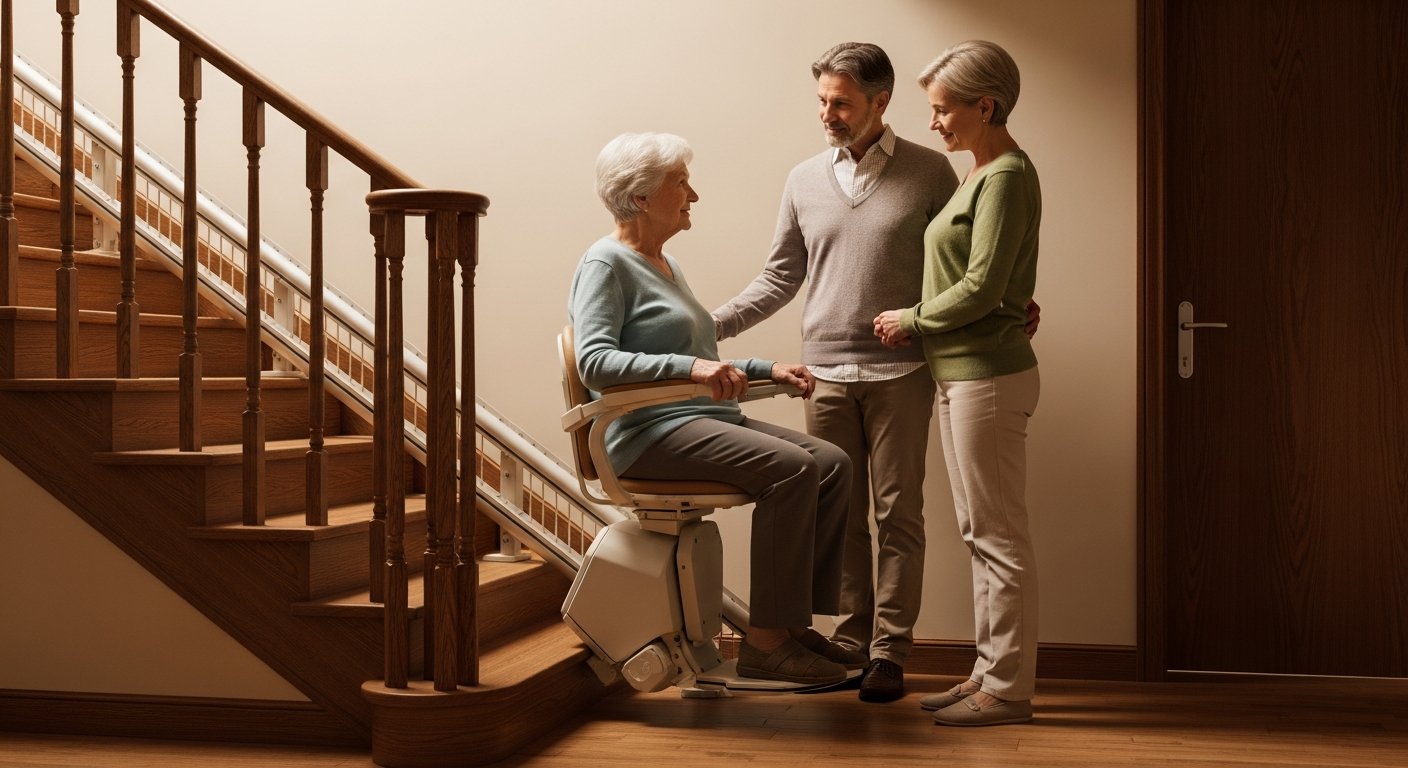
Does Private Health Insurance Cover Stairlifts?
Find out if private health insurance stairlift coverage can help you stay safe at home. Call us at (833) 877-9927 for expert guidance on benefits and appeals.

By Marcus Feldman
Compare health plans
Finding plans in your area…
If you or a loved one struggles with stairs due to age, injury, or a chronic condition, a stairlift can restore independence and safety at home. But the cost of purchasing and installing one often runs between $2,000 and $15,000, leaving many families wondering: will my private health insurance help pay for it? The short answer is that most standard private health insurance plans do not cover stairlifts as a medical expense, but there are important exceptions, policy nuances, and alternative funding paths that can save you thousands. Understanding how private health insurance stairlift coverage really works is the first step toward avoiding surprise bills and finding the financial help you need.
Why Stairlifts Are Rarely Covered by Standard Health Plans
Private health insurance in the United States is designed primarily to cover medical services: doctor visits, hospital stays, surgeries, prescription drugs, and diagnostic tests. Stairlifts fall into the category of home modifications or durable medical equipment (DME) under some policies, but insurers often classify them as non-medical home improvements rather than medically necessary equipment. To be covered as DME, an item must be used primarily for a medical purpose, be reusable, and be appropriate for use in the home. A stairlift does help someone with a mobility impairment move between floors, but insurers argue that a wheelchair ramp or a bed on the ground floor can achieve the same goal at lower cost. As a result, private health insurance stairlift coverage is explicitly excluded in the vast majority of employer-sponsored and individual plans.
Even when a policy mentions home accessibility equipment, stairlifts are often grouped with grab bars, ramps, and bathroom modifications, which are typically not covered unless you have a very specific rider or supplemental benefit. Medicare Part B, for example, covers some DME like walkers and wheelchairs but explicitly excludes stairlifts. Many private insurers follow the same logic. However, there are scenarios where your plan might contribute to the cost or where you can use health insurance dollars indirectly through a Health Savings Account (HSA) or Flexible Spending Account (FSA).
When Private Health Insurance May Help Cover a Stairlift
While standard major medical plans rarely pay for a stairlift directly, there are a few situations where private health insurance stairlift coverage becomes possible:
- Medicare Advantage plans with supplemental benefits. Some Medicare Advantage (Part C) plans now include home modification allowances as a supplemental benefit. These allowances may cover up to a certain dollar amount for safety devices like stairlifts. Check the plan's Summary of Benefits or call the insurer to ask about "home safety modifications" or "fall prevention benefits."
- Long-term care insurance policies. If you have a private long-term care insurance policy, it may cover home modifications, including stairlifts, as part of a plan of care. This is more common with comprehensive policies that pay for assistive technology and home adaptations.
- Workers' compensation or auto insurance. If your need for a stairlift results from a workplace injury or a car accident, workers' compensation or auto insurance may cover the modification as part of your medical recovery. This is separate from health insurance but can be a powerful alternative.
- Employer self-funded plans with medical necessity exceptions. Very rarely, an employer that self-funds its health plan might approve a stairlift if a doctor writes a strong letter of medical necessity and the plan has no explicit exclusion. This requires a formal prior authorization and an appeal if initially denied.
In all these cases, success depends on how well you document the medical need. A physician must clearly state that the patient cannot safely navigate stairs and that a stairlift is the least restrictive and most cost-effective solution compared to moving or renovating.
How to Check Your Policy and File a Claim for a Stairlift
If you want to pursue private health insurance stairlift coverage, follow these steps:
- Review your plan documents. Look for sections on Durable Medical Equipment, home health benefits, or supplemental benefits. Search for the word "stairlift" or "home modification" in the Evidence of Coverage (EOC) document.
- Call your insurance company. Ask a customer service representative: Does my plan cover stairlifts as DME? Is there a home modification benefit? What documentation do I need for a medical necessity review?
- Get a prescription and Letter of Medical Necessity. Your doctor needs to write a detailed letter explaining the diagnosis, functional limitations, why a stairlift is needed, and why alternatives like moving a bedroom downstairs are not feasible or safe.
- Submit a prior authorization request. Do not buy the stairlift before getting approval. If approved, you will know your financial responsibility. If denied, you can appeal.
- Appeal if denied. Most initial denials are based on contract exclusions. In your appeal, cite any plan language that does not explicitly exclude stairlifts, and provide additional medical evidence. If you reach a dead end with the insurer, contact your state's insurance department for assistance.
Even if your plan rejects coverage, the appeal process can sometimes lead to a partial payment or a one-time exception, especially if you have a high-deductible plan and the stairlift qualifies as a preventive safety measure under certain rare circumstances.
Using an HSA or FSA to Pay for a Stairlift
A Health Savings Account (HSA) or Flexible Spending Account (FSA) allows you to use pre-tax dollars for qualified medical expenses. The IRS says a stairlift is a qualified expense if it is primarily for medical care, meaning it alleviates a specific medical condition. However, if the stairlift adds value to your home, only the cost above the increase in home value is deductible. For practical purposes, many people successfully use their HSA/FSA debit cards to purchase or reimburse stairlift expenses, and the IRS seldom challenges this if you have a prescription. This is not technically private health insurance stairlift coverage, but it effectively reduces your out-of-pocket cost by 20-30 percent depending on your tax bracket. Check with your HSA/FSA administrator about documentation requirements.
Alternatives to Health Insurance for Stairlift Funding
Since most health plans do not cover stairlifts, it is wise to explore other resources. Many nonprofit organizations, state Medicaid waiver programs, and veteran benefits offer grants or low-interest loans for home modifications. For example, the U.S. Department of Veterans Affairs (VA) may cover stairlifts for eligible veterans through the Home Improvements and Structural Alterations (HISA) program. Local Area Agencies on Aging often have financial assistance for seniors. If you are considering purchasing a health plan that might include such benefits, shopping around is key. At NewHealthInsurance.com, you can compare private health insurance prices in Alabama and other states to find plans that offer supplemental home modification benefits or lower deductibles that make out-of-pocket stairlift costs more manageable.
How to Choose a Health Plan That Offers Home Modification Coverage
If you are still in the process of selecting a private health insurance policy and anticipate needing a stairlift in the future, look for these features during enrollment:
- Medicare Advantage plans with a home modification or fall prevention allowance (common in 2026 plans).
- Employer plans that offer a Health Reimbursement Arrangement (HRA) that can reimburse home safety equipment.
- Plans with a broad DME definition that does not specifically exclude stairlifts.
For families, understanding how to navigate these choices is critical. Our guide on family private health insurance in Texas: plans and tips explains how to evaluate plan benefits for the whole household, including any supplemental coverage for mobility aids.
The Role of Prior Authorization and Medical Necessity Reviews
Even in the rare case where a plan might consider covering a stairlift, you must go through a prior authorization process. The insurer will ask for proof that the stairlift is medically necessary. This means your doctor must provide: a diagnosis, how the condition limits stair use, why a stairlift is the appropriate solution, and why alternatives (like a first-floor bedroom) are not viable. The insurance company will then review the request against their medical policy. If they deny it, you have the right to an internal appeal and then an external review. At NewHealthInsurance.com, we provide step-by-step guidance on how to buy private health insurance, including understanding the appeals process for any coverage.
If you live in a state with high insurance costs, you might wonder about affordable options that still offer good coverage for home modifications. For example, low cost private health insurance Nebraska 2026 plans often include Medicare Advantage products with built-in home safety benefits. Comparing these plans can uncover options that others overlook.
Practical Tips for Negotiating a Stairlift Purchase
Whether you pay out-of-pocket or get partial insurance coverage, stairlift prices vary widely. Always obtain multiple quotes from installers. Ask about reconditioned models, which can cut costs by 30-50 percent while still including a warranty. Some dealers offer rental options, which may be covered under insurance as DME rental rather than a purchase, opening another potential private health insurance stairlift coverage path. Keep all receipts and any correspondence with your insurer; you may need them for tax deductions or future appeals.
If you are facing a claim denial, do not give up. Many policyholders successfully overturn denials by persisting through multiple appeal levels. Document every call and copy every letter. If you need help navigating the process, call our team at (833) 877-9927 for guidance on health insurance appeals and plan comparisons.
Ultimately, private health insurance stairlift coverage is not guaranteed, but knowing where to look and how to advocate gives you the best chance. Whether through a supplemental benefit, an HSA, an appeal, or an alternative program, the goal is the same: stay safe and independent in your own home without breaking the bank.
Compare health plans
Finding plans in your area…